Arweave-Powered DePIN Projects

Permanent and Trusted Green Energy Data Storage for Carbon Neutral Applications
Arweave-Powered DePIN Projects
Permanent and Trusted Green Energy Data Storage for Carbon Neutral Applications
Overview of the Arkreen Network from the Arweave Permanent Storage Point of View
Decentralized global renewable energy data infrastructure platform- Arkreen Network, which combines crypto-economic incentives, blockchain, and the Internet of Things (IoT), convergent solutions together, has a singular opportunity to promote collective action toward mitigating carbon emissions, demonstrate industry-wide decarbonization, and stimulate new demand for clean energy resources. Arkreen is a web3 decentralized global resource energy distribution platform powered by Permanent Decentralized Storage Solutions (Arweave) to enable the interconnection and monetization of distributed energy resources for carbon reduction applications. Arweave’s permanent storage system aligns well with Arkreen Network’s green and sustainable data objectives due to its decentralized nature, long-term data preservation capabilities, affordability, and support for transparency. By leveraging Arweave, Arkreen Network can not only store its data securely but also contribute to a greener and more sustainable future hence aiding carbon reduction applications. The Arkreen Network’s innovative Proof of Green-energy Generation data (PoGG) algorithm ensures the trustworthy and transparent reporting of renewable energy data, including solar PV information, onto the blockchain. Miners, acting as smart data logger owners or web3 users, adhere to the PoGG protocol when reporting this green data. This data is collected, consumed, and stored in the Permanent storage system by the Arkreen Network. Miner owners, such as energy equipment owners, mint AREC (Arkreen Renewable Energy Certificate) NFTs based on the renewable energy (RE) data generated within the network.
Arkreen’s DePIN model promotes active climate actors’ engagement by harnessing climate data from pristine renewable sources like solar panels. Arkreen miners, part of the Supply Side, use the Arkreen Network to declare and manage their renewable electricity generation and consumption, earning rewards for their contributions. Participants in this category include owners of solar photovoltaic equipment or energy-saving households and web3 users.
On the Demand Side, users utilize the Arkreen Network to access electricity data, enabling the creation of applications and services like Renewable Energy Certificate (REC) issuance and Virtual Power Plants (VPP). Examples of Demand-side participants encompass VPP operators, Green Computation operators, and more. Utilizing cryptographic economic protocols and blockchain technology, DePINs empower a more streamlined, decentralized, and equitable approach to infrastructure deployment. By leveraging Arweave’s permanent storage capabilities, Arkreen Network ensures that green energy data (REC) remains tamper-proof and accessible, further enhancing the reliability and security of this transformative infrastructure.
In this article, we commence by providing an in-depth view of the Arkreen Network, focusing on its integration with the Arweave permanent storage system and the architectural aspects of the Arkreen Network within the Arweave ecosystem. We delve into the significant enhancements made to Arkreen’s data storage and retrieval mechanisms. We then elucidate the pivotal role of Arweave’s permanent storage as a fundamental prerequisite for a wide array of DePIN projects. Additionally, we shed light on Permaweb’s vital role as a data filtering mechanism in Arkreen and other DePIN applications. Furthermore, we offer insights into the estimated Arweave storage requirements for the Arkreen network. To conclude, we leave you with some closing thoughts.
1 Architectural aspects of the Arkreen Network within the Arweave ecosystem
The Arkreen Network employs a sophisticated approach to monitor its green energy production through the utilization of our advanced Proof of Green Energy Generation (PoGG) algorithm. Miners engaged in completing PoGG tasks are eligible to receive incentives for their efforts. This innovative PoGG algorithm plays a pivotal role in gauging the Arkreen Network’s green energy generation capabilities, forming the bedrock upon which the network delivers a range of services associated with green energy data assets.
To ensure accuracy and reliability, the Arkreen network has established a protocol for compensating miners who consistently provide precise data regarding green electricity production. All miners connected to the Arkreen network are mandated to sample data at regular intervals, specifically every five minutes (5 mins), and store this data locally. Subsequently, they are required to submit the cached data on an hourly basis (1 hr). Following the data report, miners have the option to erase the local cache data, preparing themselves for the upcoming data submission cycle. This meticulous process ensures the Arkreen Network maintains a robust and dependable record of its green energy production, further solidifying its commitment to sustainable energy practices.
Below, we describe the high-level architecture of the Arkreen Network to collect, convert, and store valuable PoGG data in an Arweave decentralized Permanent storage system.
2 Notary Contract Architecture of the ArKreen Network
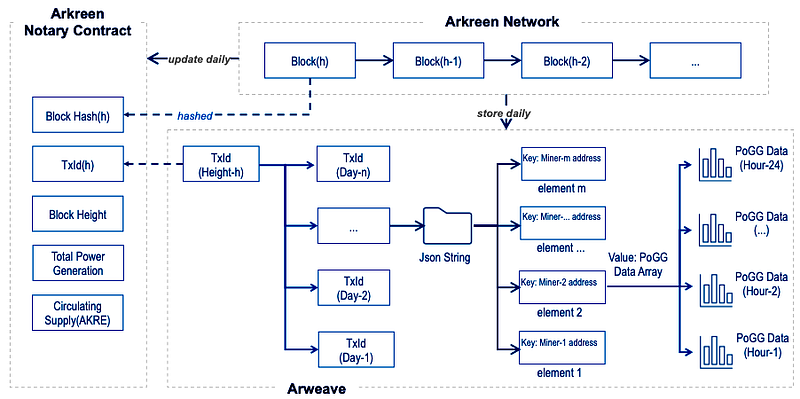
Figure 1: Notary architecture of the Arkreen network stores PoGG data on Arweave
The Arkreen Network archives the raw data generated by Arkreen miners within the decentralized Arweave storage system while recording the transaction IDs of uploads in the Arkreen Notary contract deployed on the Polygon blockchain.
Arkreen Network uses a hierarchy data structure to store green data in the Arweave storage system. The root of the data structure is the root transaction ID, which is a file that includes a lot of daily transaction IDs. The daily transaction ID is a JSON file that includes the daily data files of all the Arkreen miners.
Each day, Arkreen Network packs all daily data generated two days ago in a JSON file. The file includes a JavaScript object, which has many fields. The field name is the miner address, and the value is the daily green data of a single miner. The JSON file will be uploaded to Arweave storage and generate a single transaction ID; this is the daily transaction ID.
The latest generated daily transaction ID and all the old daily transaction IDs will be packed into a single file and also uploaded to Arweave; this is the root transaction ID, and then the root transaction ID will be notarized in the Arkreen Notary contract on the Polygon blockchain. Anyone can use the root transaction ID in the Arkreen Notary contract to fetch all data generated by the Arkreen Network to check or utilize this data.
3 How does Arkreen Network create daily Transaction ID (Tx ID) using the Arweave permanent storage system?
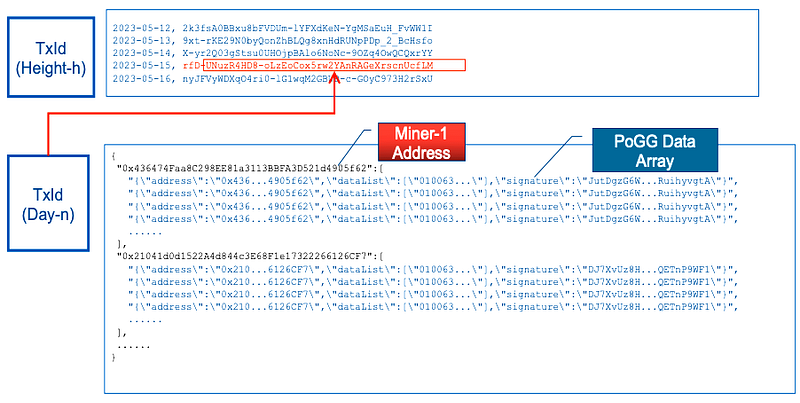
Figure 2: Miner Daily Generated Transaction IDs (TxIds) for the Arkreen Network on Arweave
The term “tx-day” in the context of the Arkreen network signifies a specific file format, which takes the form of a JSON string. This JSON string, functioning as a structured JavaScript object, comprises an array of distinct fields. Notably, each field within this object is uniquely identified by a miner’s address, serving as its field name.
In tandem with these field names, there exists a corresponding JavaScript array. These arrays serve as containers for a collection of PoGG reports, each exclusively generated by the miner associated with the corresponding address. To delve deeper into the nature of these PoGG reports, they encapsulate vital green energy data generation. Each element within the JavaScript array represents an individual PoGG report, meticulously documenting the miner’s commitment to green practices and sustainable energy consumption, supply, and storage in an Arweave permanent storage system. This highly organized data structure not only streamlines the tracking process but also facilitates the retrieval of comprehensive information pertaining to the ecological impact of every miner within the Arkreen network. In essence, it allows for a detailed assessment of each miner’s contribution to sustainable practices hence contributing to the greener earth. Below is a detailed description of the process of how miner Arkreen transaction activities are created daily on the permanent storage system.
4 Estimation of Arkreen PoGG Data Storage Size on Arweave’s Permanent Storage System
With 1,000,000 miners onboarded on the Arkreen Network, each generating 700MB of data every hour, so the total data uploaded to Arweave every day would be:
1,000,000 miners * 17.76KB/miner = 17.76GB per day.
Over the course of a year, this daily data generation accumulates to:
17.76 GB/day * 365 days/year = 6.46TB.
So, the Arkreen Network would upload approximately 6.5 terabytes of data to Arweave in a year under these conditions. This is a substantial amount of data and highlights the importance of efficient data management and storage solutions to handle such massive volumes.
5 How do Parmaweb services play a pivotal role in enhancing data accessibility and filtering within Arkreen and DePIN applications?
Permaweb’s vital function as a data filtering mechanism serves as a cornerstone for improving the scalability and reliability of green data within the Arkreen Network and other DePIN applications, ultimately advancing their capabilities in promoting sustainable practices and public interest initiatives. Permaweb plays a pivotal role as a data filtering mechanism within the Arweave ecosystem, and its significance extends to enhancing the scalability and reliability of green data for not only Arkreen but also other DePIN applications. By acting as a filtering mechanism, Permaweb efficiently processes and organizes data, ensuring that only relevant and valuable green data is retained and made accessible when needed.
This filtering process optimizes the overall performance of the Arkreen Network and other DePIN applications by reducing the noise and clutter in the data. Consequently, it enhances the scalability of these platforms, allowing them to handle larger volumes of data without compromising efficiency. Moreover, Permaweb’s role in filtering data contributes to the reliability of green data, as it helps in maintaining data integrity and accuracy, which are paramount for applications focused on carbon reduction applications and huge IoT data sensors from the DePIN applications.
6 Why permanent storage is important for Arkreen and REC applications?
Arweave’s permanent storage system serves as a cornerstone within the Arkreen network and REC applications, playing a multifaceted and indispensable role:
a) Data Immutability
Arweave’s innovative “blockweave” technology ensures the enduring integrity of stored data. This steadfastness effectively safeguards against any unauthorized tampering with critical information, such as Green Energy (PoGG) Data and REC issuance records.
b) Trust and Transparency
Trust and transparency form the bedrock of Arkreen’s mission to verify the origin and authenticity of its green data sources. Arweave’s storage solution provides a secure repository for this crucial data, bolstering reliability, accuracy, and trust in all claims.
c) Long-Term Data Retention
The Arkreen network relies on Arweave for the long-term preservation of historical green data, an imperative for REC and compliance needs.
In the context of climate traceability, the necessity of preserving this evidence permanently cannot be overstated.
d) Decentralization and Resilience
Enhancing the overall resilience of permanent data storage infrastructure is paramount for the robustness of green data and REC applications. Arweave’s decentralized approach contributes significantly to the system’s ability to withstand disruptions and maintain data integrity.
e) Integration with Smart Contracts
Arweave’s architecture seamlessly integrates with smart contracts, a critical asset in the realm of REC applications. REC applications increasingly depend on automated and transparent processes, making Arweave’s smart contract integration an essential component. Smart contracts on Arweave facilitate REC issuance, trading, and retirement, streamlining these processes for the benefit of all stakeholders.
f) Proof of Energy Generation
The permanent storage capabilities of Arweave play a pivotal role in establishing verifiable records of green energy data generation and consumption. These records play a vital role in validating renewable energy claims, ultimately boosting the credibility of REC issuance and trading. Arweave’s commitment to eco-friendly data storage aligns perfectly with Arkreen’s mission, reinforcing its dedication to sustainability.
7 Why and How does permanent storage represent a fundamental requirement for a broader spectrum of DePIN projects?
Arweave’s durable storage establishes a crucial foundation for DePIN applications. Accessibility and security stand out as key drivers for Arweave’s relevance in DePIN projects. As DePIN initiatives grow, the demand for scalable data storage becomes essential — precisely where Arweave’s solution excels by ensuring historical data access. Permanent storage offers an alternative approach to cost, as it allows users to pay a one-time fee for storage space and store their data indefinitely, suitable for DePIN applications that require large storage of IoT data sensors. Permanent storage providers often provide user-friendly interfaces and extra features for an enhanced user experience suitable to DePIN applications. It offers automated backup and synchronization across devices, ideal for real-time data updates in DePIN applications.
Nonetheless, the contribution that Arweave storage brings to the DePINs ecosystem goes beyond mere storage; it establishes a robust foundation for these applications to thrive. One of the primary pillars of Arweave’s significance lies in its durability and extensibility. These attributes are pivotal for DePIN applications, ensuring the reliable and resilient handling of data generated by various IoT data sensors. Accessibility and security emerge as paramount drivers that underline Arweave’s relevance in DePIN projects. The decentralized nature of Arweave’s network ensures that data remains accessible from anywhere in the world, promoting the global reach that DePIN initiatives often require. Moreover, its blockchain-based security protocols guarantee data integrity and immutability, assuring users that the information collected from IoT devices within DePIN networks is tamper-proof and trustworthy.
Furthermore, Arweave’s permanent storage providers often offer user-friendly interfaces and additional features tailored to enhance the user experience — a crucial aspect for DePIN applications aiming for widespread adoption. These features may include automated backup and synchronization functionalities across devices, enabling real-time data updates within DePIN networks. This real-time capability is especially valuable in scenarios where immediate data insights are crucial for optimizing physical infrastructure performance and ensuring the seamless operation of various connected components.
8 Closing thoughts
In conclusion, the Arkreen network has harnessed the Arweave decentralized storage system to safeguard vital PoGG (Proof of Green Energy Generation) green energy data, significantly bolstering transparency, reliability, and accessibility within the network. Looking forward, the integration of Permaweb services within the Arweave ecosystem promises exciting prospects for Arkreen and other DePINs. Its data permanence and efficient data filtering mechanisms will further elevate the integrity and accessibility of green energy data, fostering more efficient, decentralized, and equitable infrastructure deployment. This innovative synergy between Arweave, Permaweb, and DePINs holds tremendous potential for advancing the objectives of sustainable, environmentally-conscious applications and contributing to a greener and fairer world.
By Arkreen on September 29, 2023.