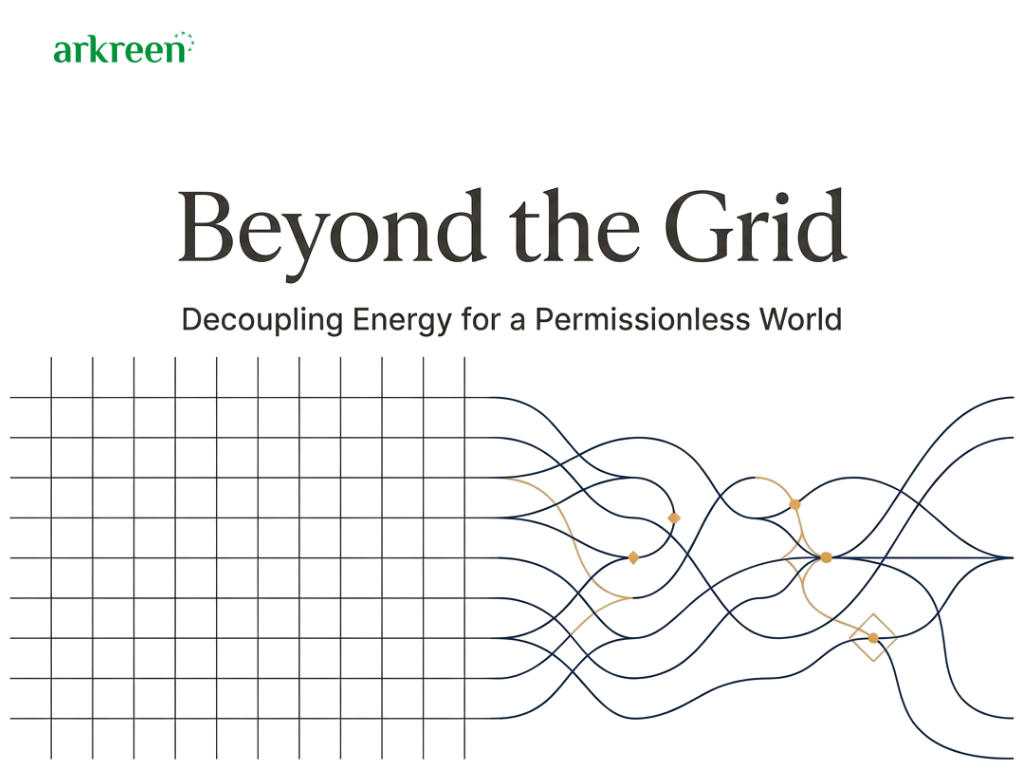
Beyond the Grid: Decoupling Energy for a Permissionless World

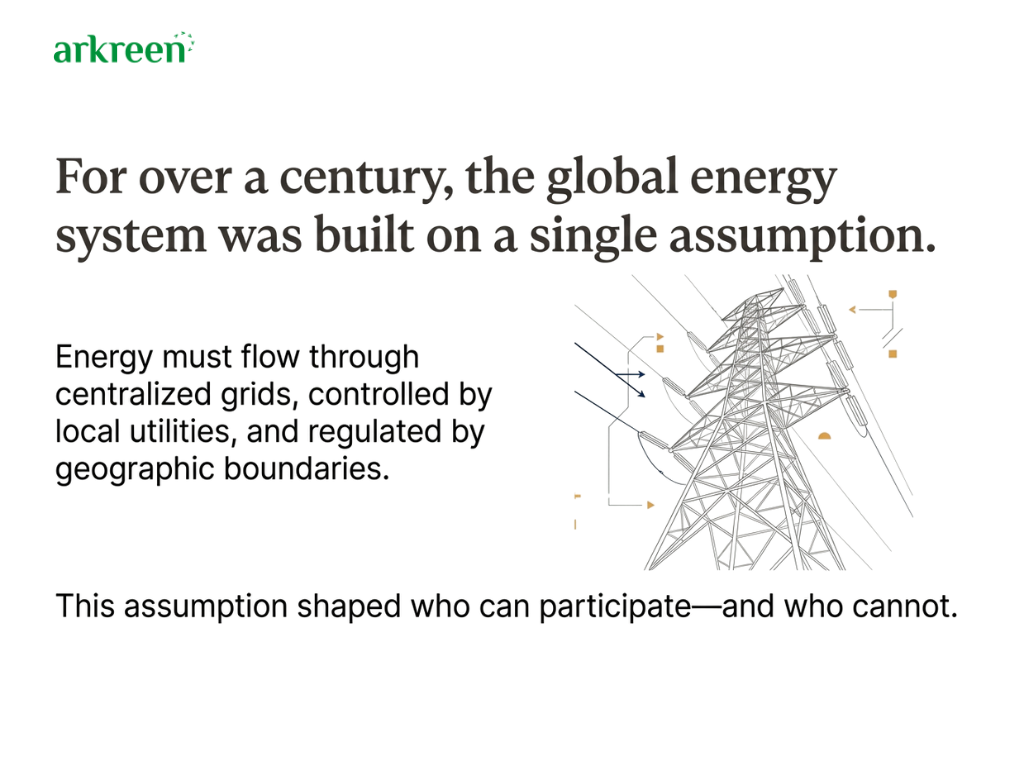
For more than a century, the global energy system has been built around a single assumption:
Energy must flow through centralized grids, controlled by local utilities, and regulated by geographic boundaries.
That assumption shaped how electricity is produced, distributed, priced, and monetized. It also shaped who can participate—and who cannot.
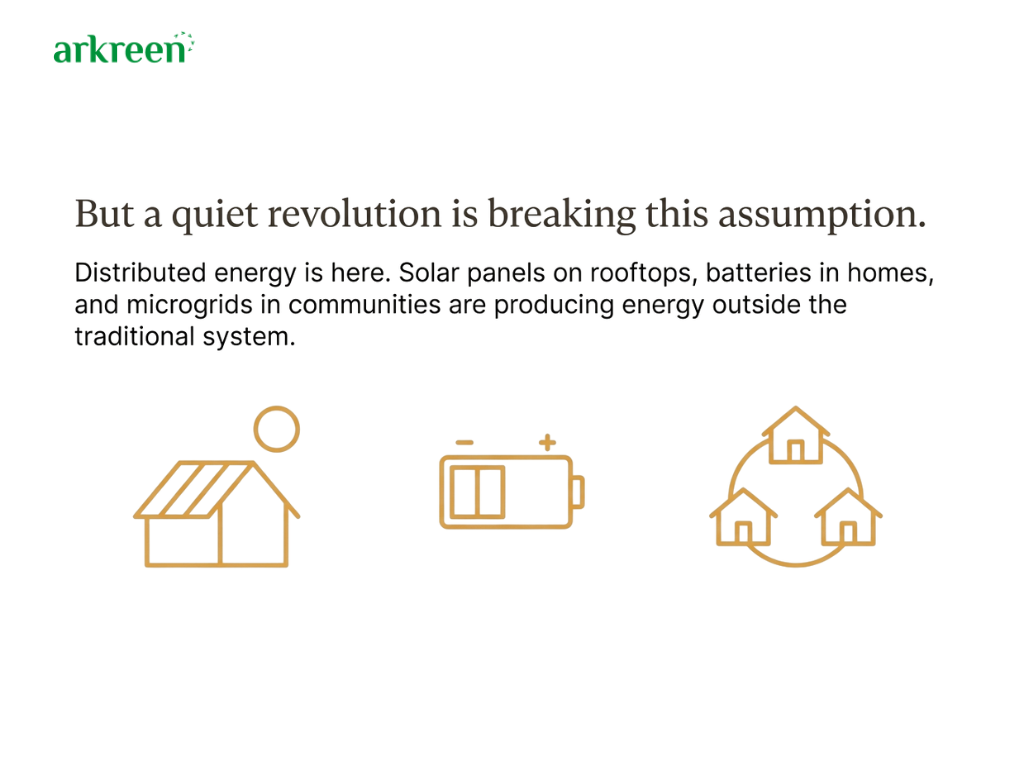
But distributed energy is quietly breaking this assumption.
Solar panels on rooftops, batteries in homes, microgrids in communities, and off-grid generation in emerging markets are producing energy outside the traditional system. Yet economically, most of this energy remains trapped.
Not because it lacks value.
But because it lacks a global, permission-less way to express that value.
The Hidden Coupling Problem
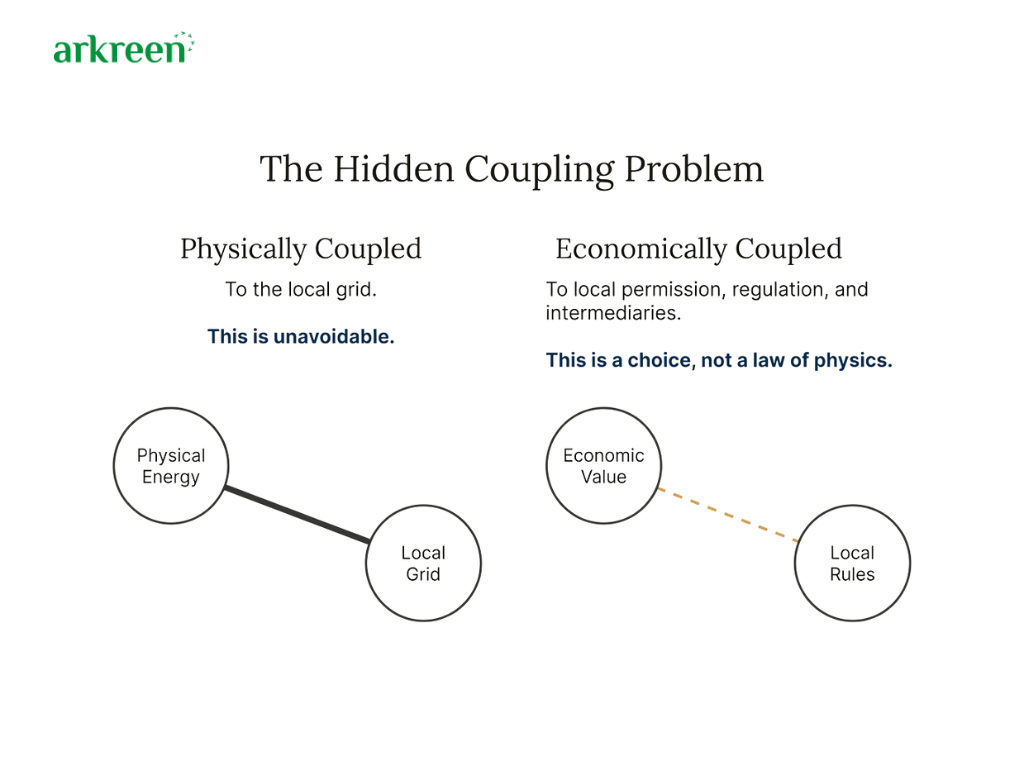
Today, energy is coupled in two ways:
- Physically — to the local grid
- Economically — to local permission, regulation, and intermediaries
While physical coupling is unavoidable, economic coupling is not.
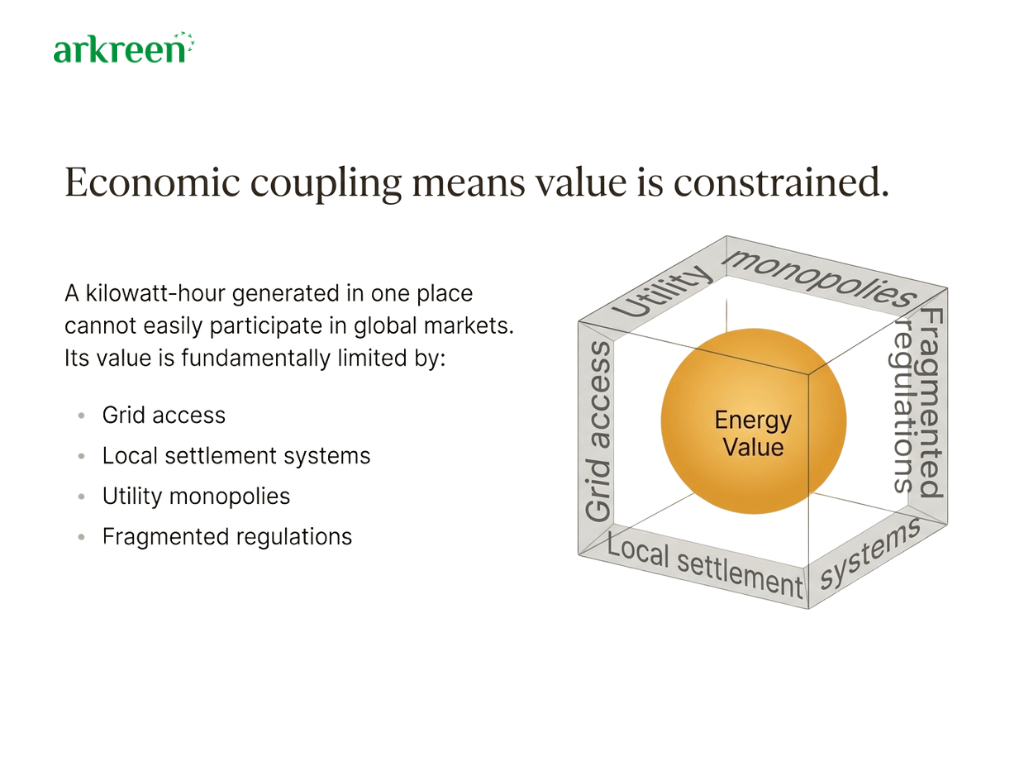
A kilowatt-hour generated in one place cannot easily participate in global markets.
Its value is often constrained by:
- Grid access
- Local settlement systems
- Utility monopolies
- Fragmented regulations
This creates a paradox:
The most decentralized energy ever produced is still monetized through the most centralized systems.
A Different Mental Model
At Arkreen, we believe energy needs a new abstraction layer.
Not one that replaces the grid,
but one that decouples energy value from grid dependency.
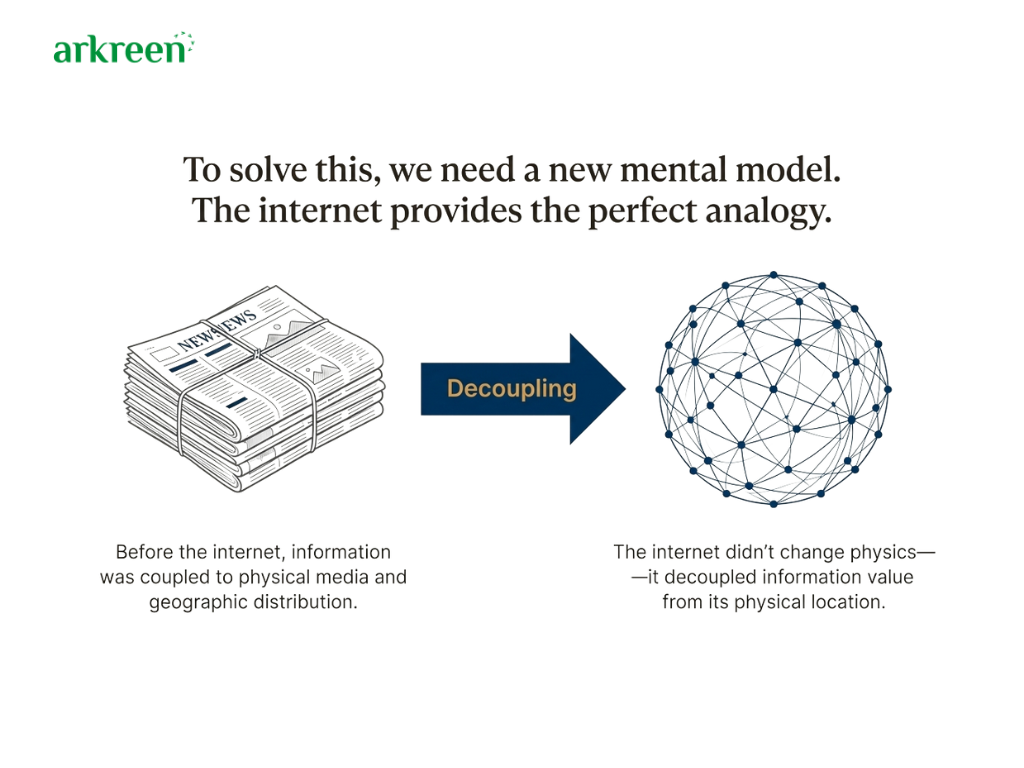
The internet offers a useful analogy.
Before the internet, information was tied to physical media and geographic distribution.
The internet didn’t change physics—but it decoupled information from location.
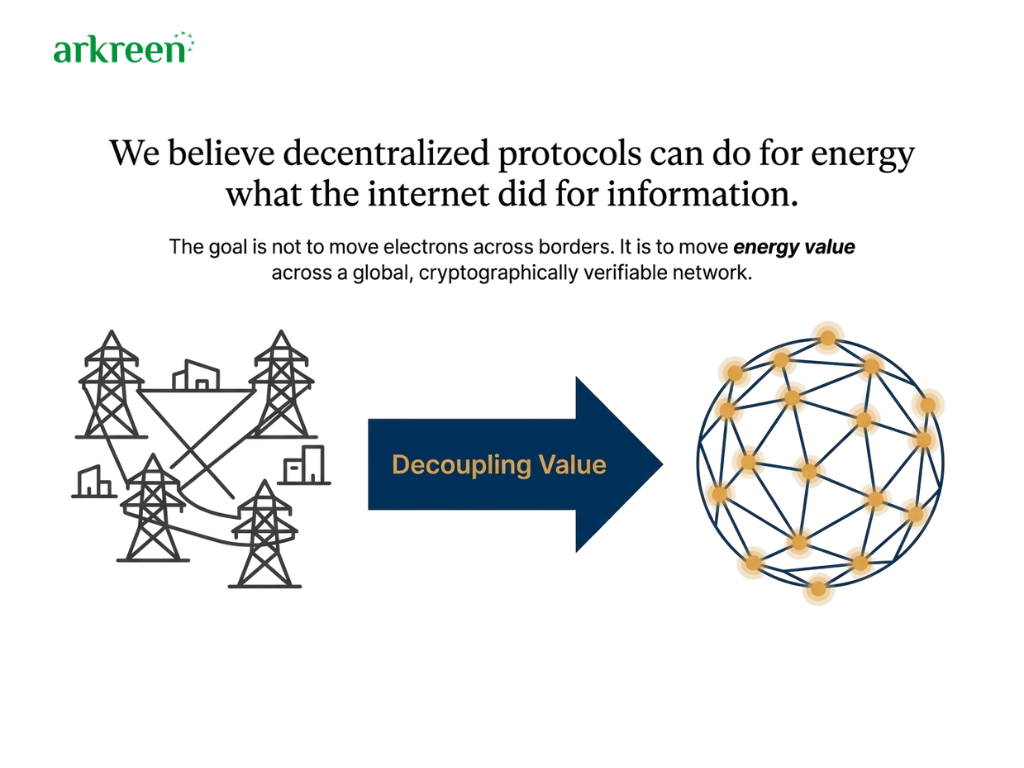
We believe decentralized protocols can do something similar for energy.
Not by moving electrons across borders,
but by moving energy value across a global, cryptographically verifiable network.
Energy as a Global, Liquid Resource
In a permissionless energy system:
- A solar panel does not need utility approval to create economic value
- A battery does not need local intermediaries to participate in markets
- A community microgrid does not need centralized infrastructure to be globally relevant
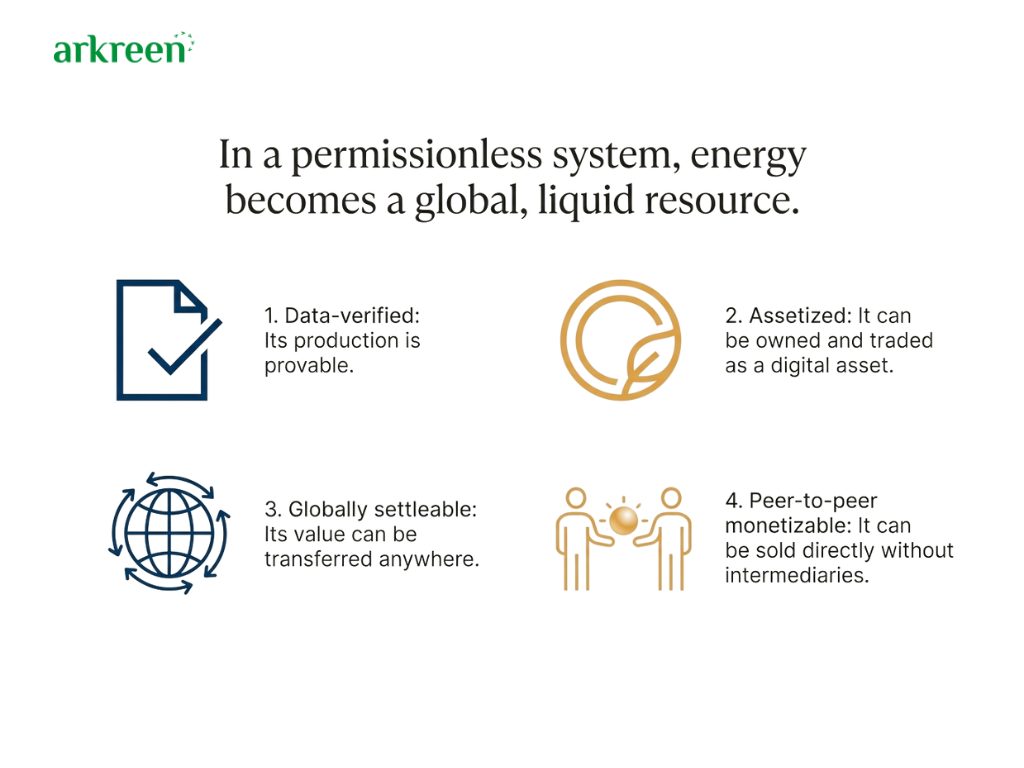
Energy becomes:
- Data-verified
- Assetized
- Globally settleable
- Peer-to-peer monetizable
This is not theoretical.
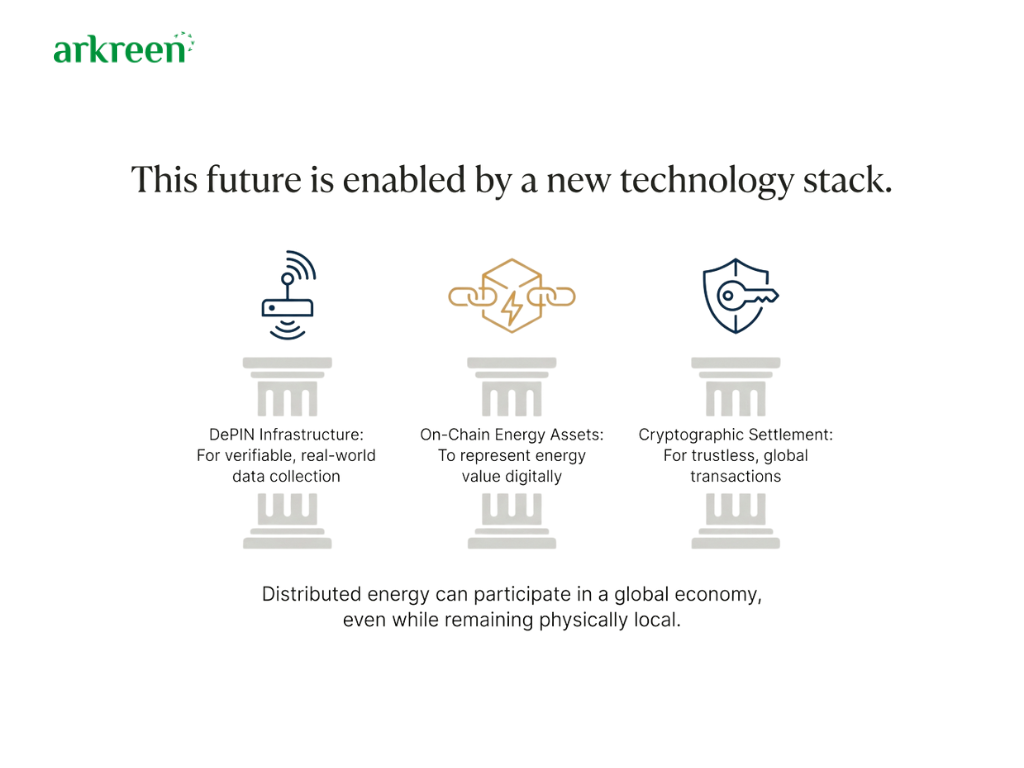
With DePIN infrastructure, on-chain energy assets, and cryptographic settlement, distributed energy can participate in a global energy economy, even while remaining physically local.
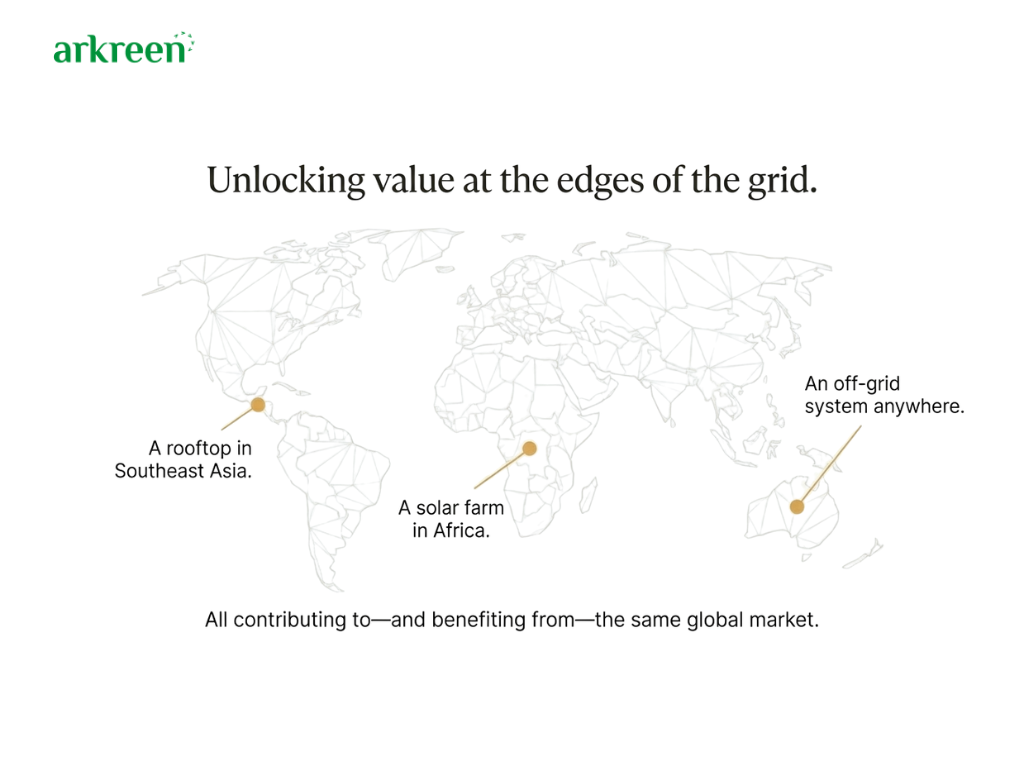
A rooftop in Southeast Asia.
A solar farm in Africa.
An off-grid system anywhere.
All contributing to—and benefiting from—the same global market.
Why Permissionless Matters
Permissionless systems are not about ignoring regulation.
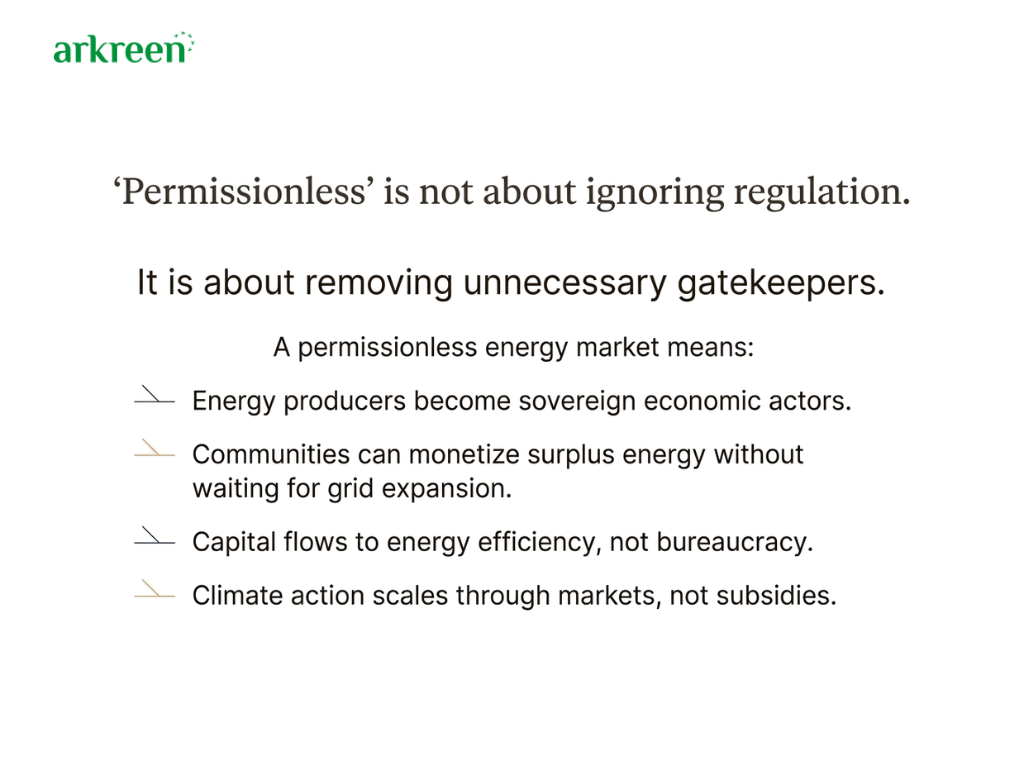
They are about removing unnecessary gatekeepers.
A permissionless energy market means:
- Energy producers become sovereign economic actors
- Communities can monetize surplus energy without waiting for grid expansion
- Capital flows to energy efficiency, not bureaucracy
- Climate action scales through markets, not subsidies
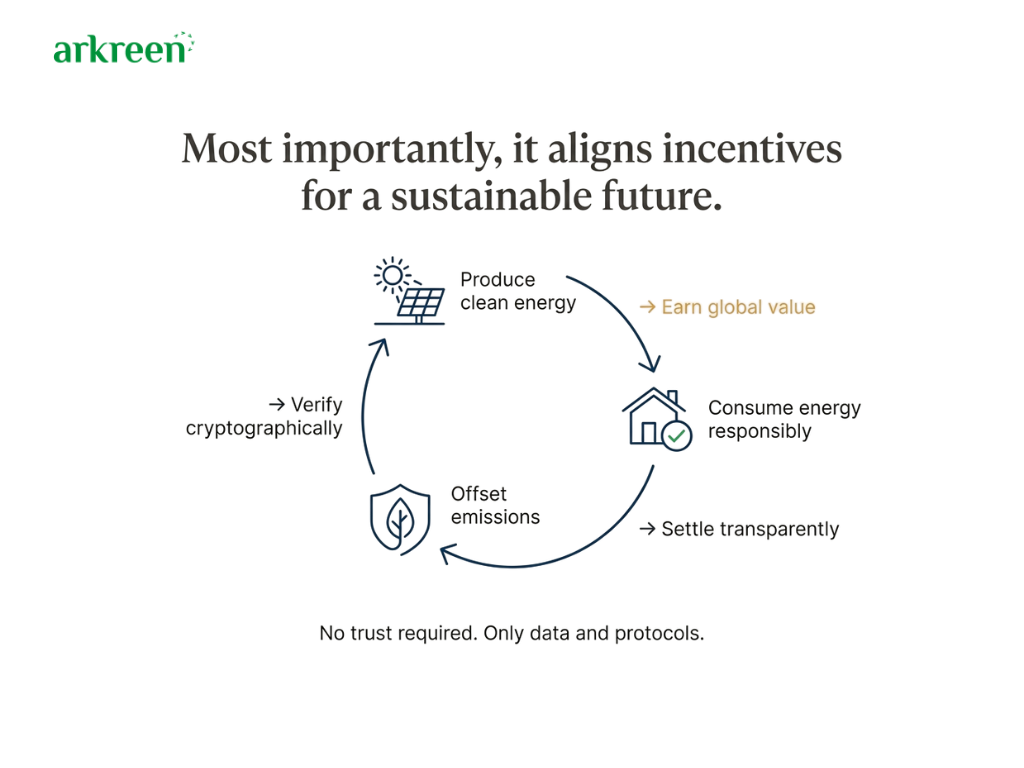
Most importantly, it aligns incentives:
- Produce clean energy → earn global value
- Consume energy responsibly → settle transparently
- Offset emissions → verify cryptographically
No trust required.
Only data and protocols.
Toward a Peer-to-Peer Energy Market
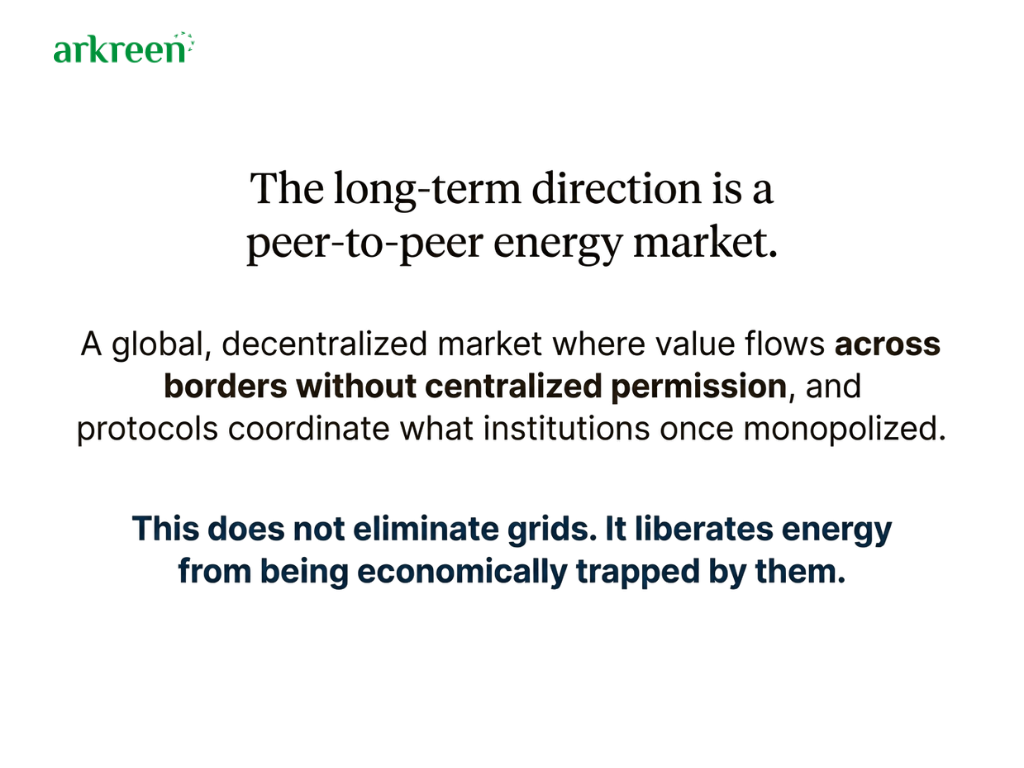
The long-term direction is clear:
A global, peer-to-peer, decentralized energy market
where:
- Energy production, consumption, and settlement happen directly
- Value flows across borders without centralized permission
- Protocols coordinate what institutions once monopolized
This does not eliminate grids.
It liberates energy from being economically trapped by them.
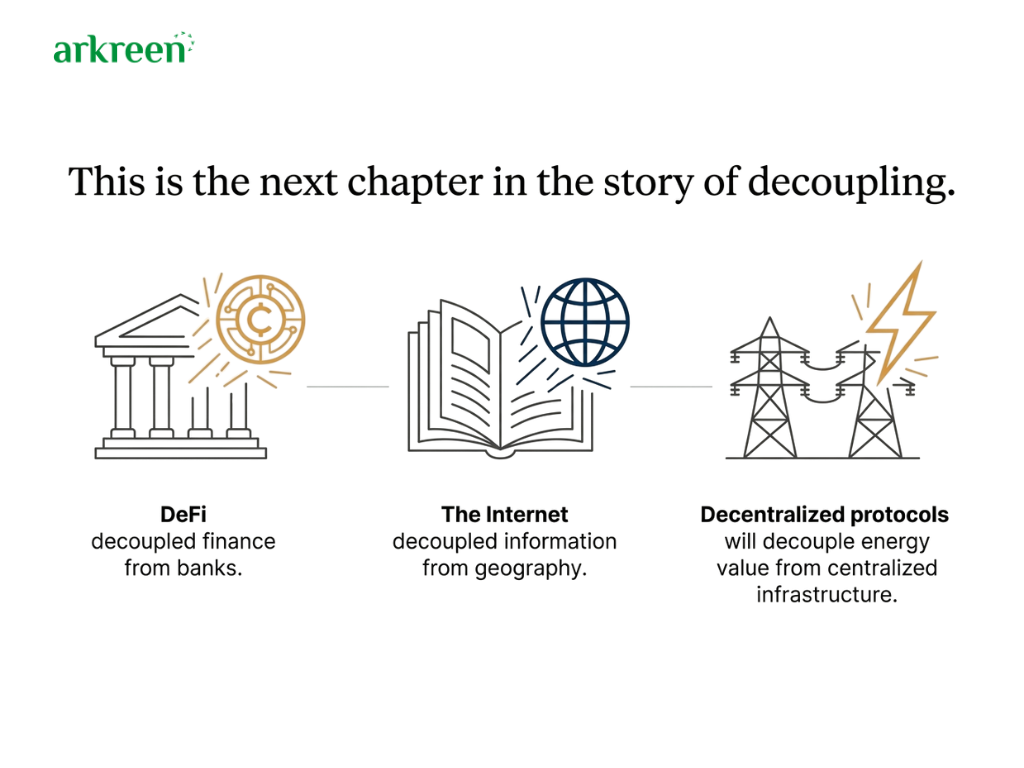
Just as DeFi decoupled finance from banks,
and the internet decoupled information from geography,
We believe decentralized energy protocols can decouple energy value from centralized infrastructure.
The Stakes
Energy is the most fundamental resource in the world.
Who can produce it.
Who can monetize it.
Who can access its value.
These questions will define the next global economic era.
Decoupling energy from centralized permission is not a technical upgrade.
It is a shift in power, incentives, and possibility.
This is the direction we are exploring at Arkreen.
And this is only the beginning.