Hong Kong Web3 Festival Day 2 | ReFi : The Web3 Force Driving Carbon Neutrality

Updates on Sub-stage 3: Renewable Finance (ReFi)-Net Zero Web3
Hong Kong Web3 Festival Day 2 | ReFi : The Web3 Force Driving Carbon Neutrality
Updates on Sub-stage 3: Renewable Finance (ReFi)-Net Zero Web3
On April 13th, 2023, a highly anticipated event with the theme of “ReFi: Net zero web3” was held in Hong Kong. The event was jointly organized by arkreen, Wanxiang Blockchain, and HashKey Group and featured exceptional pioneers, investors, developers, as well as famous projects and entrepreneurs from across the carbon market. The event aimed to explore how Web3 technology could contribute to achieving net-zero goals. Attendees had the opportunity to hear from leading experts in various fields, including the creation of carbon assets, the building of a carbon market on the blockchain, and the development of derivative financial products based on tokenized carbon assets. The event was held to discuss the emergence of ReFi and its potential to transform traditional carbon neutrality business models. The insightful presentations and discussions shed light on the ways in which blockchain and Web3 technology can be utilized to promote a sustainable future. The event was successful, drawing a diverse audience and generating meaningful discussions about the future of carbon neutrality and blockchain technology.
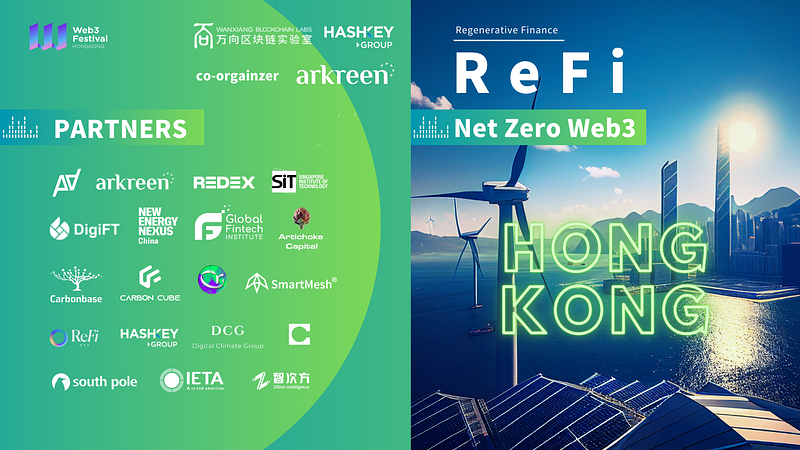
Despite the global carbon market being in its early stages of development, ReFi’s involvement in Web3 has led to the formation of numerous entrepreneurial projects worldwide, with a deep engagement in developing and optimizing carbon credit standards. Hong Kong, a prominent financial hub, is also displaying a growing interest in achieving net-zero objectives and advancing Web3 and blockchain technology. The government has introduced favorable policies for renewable energy credits tokenization, green finance, and ESG to regenerate the planet, creating opportunities for entrepreneurs and investors. As a result, a thriving regeneration and web3 ecosystem is emerging in Hong Kong, with initiatives such as the ReFi Hong Kong community. These initiatives provide a solid foundation to build upon and establish a network of individuals and organizations committed to regenerative finance and sustainable development. During the forum, keynote speakers including Allinfra, New Energy Nexus, and ReFi DAO shared their insights on how to leverage Hong Kong’s favorable operating environment, policy support, and communication platform to promote the development of the ReFi ecosystem and further integrate Web3 with the traditional world.
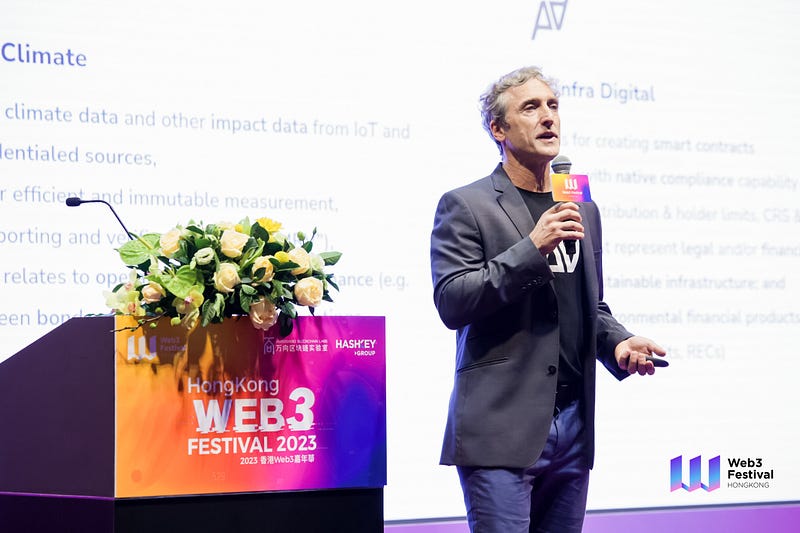
Bill Kentrup, Allinfra Co-founder, Keynote: Status and Vision for Web3 in Climate-aligned Finance
Bill Kentrup, Co-founder of Allinfra, discussed the Status and Vision for Web3 in Climate-aligned Finance”, highlighted the role of Web3 in climate-aligned finance and how Allinfra Digital is leveraging IoT devices and blockchain technology to create tokenized green bonds and carbon credits. By deploying dMRV on-chain, this approach brings greater efficiency to the industry, accelerates issuance, reduces costs, and is being piloted in compliance and voluntary markets, as well as being adopted by governments and private issuers worldwide. The Web3 space is actively collaborating with the traditional climate finance industry to improve efficiency.
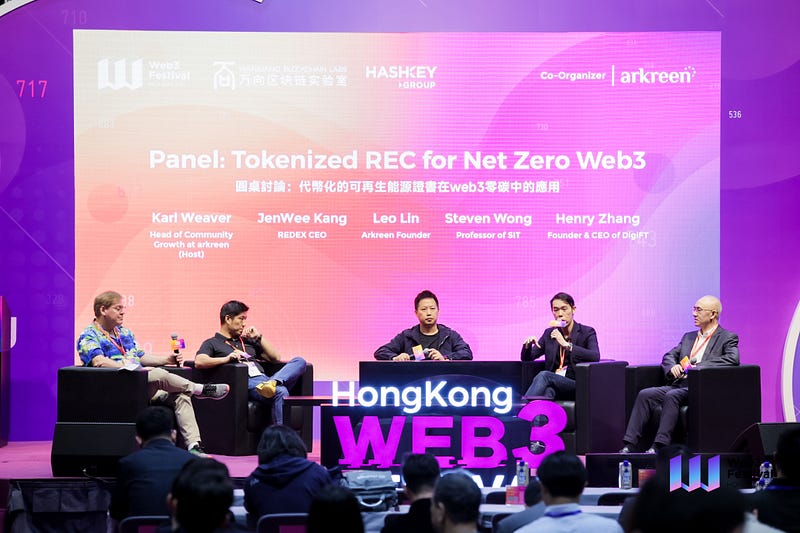
Panel 1 “Tokenized RECs for Net Zero” was hosted by Karl Weaver, head of community growth of arkreen, featuring notable guest speakers including JenWee Kang, CEO of REDEX; Leo LIN, founder of arkreen; Steven Wong, Professor of SIT; and Henry ZHANG, Founder & CEO of DigiFT
Following Bill’s presentations, the first panel was centered on ReFi and alpha researchers, and was titled “Tokenized RECs for Net Zero”. The panel was hosted by Karl Weaver, head of community growth of arkreen ,invites key players in REC issuing to complete the entire process. These include REDEX, one of the largest RECs exchange in Asia; arkreen, a web3 project that connects the supply-side and demand-side of REC; DigiFT, the owner of the MAS Singapore licensed DEX platform; and SIT virtual campus, a carbon asset provider inspiring the tokenization of regenerative energy and sustainable behaviors. During the panel discussion, there were some significant areas of agreement among the guests, including the potential of Web3 technologies to drive sustainability efforts. It was acknowledged that Web3 is still in its early stages of recognition in the real world and requires greater adoption. Furthermore, there was consensus regarding the advantages of tokenization in enhancing liquidity and connecting individual sustainable digital assets to Web3 decarbonization demand. Nonetheless, the panelists also have their own distinct perspectives and approaches. JenWee Kang, CEO of REDEX, focuses on the integration of Web3 features into current real-world products to accelerate adoption, whereas Leo LIN, founder of arkreen, sees the Web3 community as a promising buyer for fungible RECs. Steven Wong, Professor of SIT, highlights the importance of engaging individual consumers and households in adopting Web3 technologies, as well as exploring solutions for lowering consumers’ carbon tax expenses. Meanwhile, Henry ZHANG, Founder & CEO of DigiFT, brings attention to the drawbacks of current ReFi assets, such as the lack of accessibility and tradeability. In conclusion, the guests expressed their commitment to collaboratively promote sustainability and improve liquidity of tokenized RECs through their unique adoption strategies and focus on various aspects.
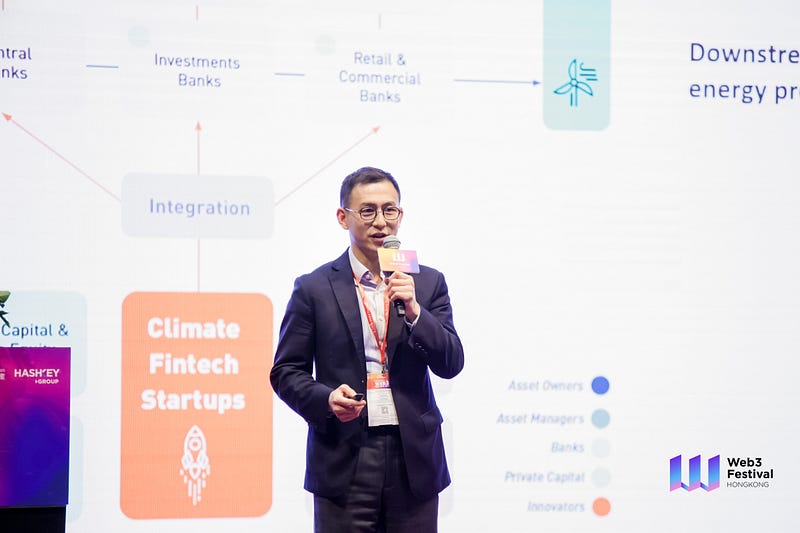
Yafu ZHAO, Head of Climate Fintech of New Energy Nexus, Keynote: Global Climate FinTech Solutions
Yafu Zhao, Head of Climate Fintech at New Energy Nexus, spoke at a keynote titled “Global Climate FinTech Solutions,” stressing the significance of green finance and climate solutions in banking systems. New Energy Nexus is a California-based company that has deployed its services in ten countries and has 19 years of experience in digital financial innovation. The company supports fintech innovation by incubating funds and enterprises, with a particular emphasis on sustainability and Web3. Yafu proposed solutions to enhance the efficiency and sustainability of Chinese banks through the use of AI, ESG data, and traceability. He also suggested integrating blockchain, token economics, and supply chain management to create a transparent and sustainable market for carbonization or carbon neutrality in industries. Tokenizing the energy trading and green energy certification process using blockchain technology was highlighted as a key value proposition for the industry.
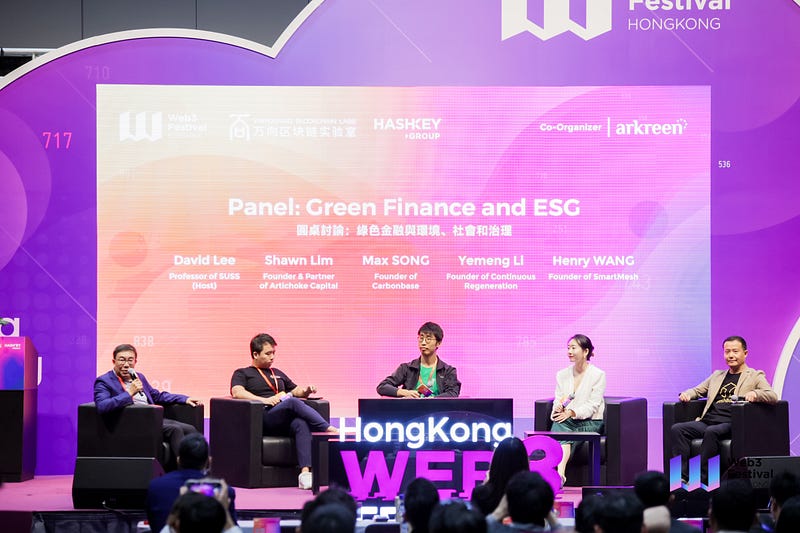
Panel 2 “Green Finance and ESG” was hosted by David Lee, Professor of SUSS, featuring notable guest speakers including Shawn Lim, Founder and Partner of Artichoke capital; Max SONG, Founder of Carbonbase; Yemeng Li, Founder of Continuous regeneration; and Henry WANG, Founder of SmartMesh
In Panel 2 of the event, titled “Green Finance and ESG,” Professor David Lee from SUSS led a discussion on how to establish a more sustainable and responsible green finance system. Prof Lee emphasized that the current discussion covers a wider range of topics, specifically on the practical applications of Web3. This is a shift from the previous conference held in 2015–2016, which centered on infrastructure construction like Bitcoin and Ethereum. To delve into these topics, Prof Lee extended an invitation to investors, NFT artists, and startup entrepreneurs from the Web3 field to join in the discourse. Artichoke Capital’s Founder and Partner, Shawn Lim, stresses the significance of low-cost energy and sustainable finance for promoting green finance and sustainability. He believes digital and real-world asset integration can lead to rapid development in the circular economy. Max SONG, Founder of Carbonbase, predicted a new wave of cryptocurrency that will attract institutional participation to address climate change. He hopes to innovate in digital finance and climate finance in Asia to cost-effectively reduce carbon footprint. Yemeng Li, Founder of Continuous Regeneration, discussed how the ReFi NFT platform helps creators and brands collaborate on sustainable products and trace their carbon footprint. They aim to gather ESG-driven brands for green consumption and promote sustainability through a chain-based data tracing mechanism. Henry WANG, Founder of SmartMesh, discussed ReFi’s plan to combine everyone’s data, including small and medium-sized enterprises, and connect to trustworthy data through Web3. He believes users should own and authorize the use of their data, which is the beginning of Web3.
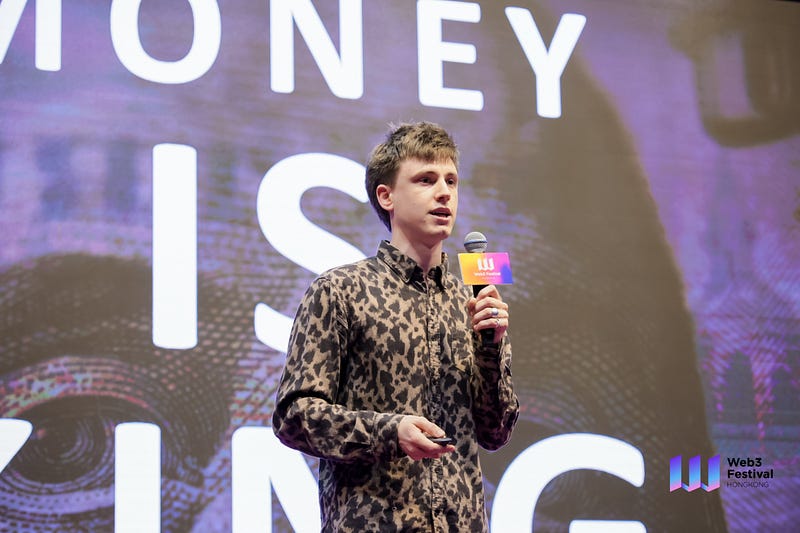
Monty Bryant, Product & Content Lead of ReFi DAO, Keynote: ReFi DAO-A Network State to Regenerate the Earth
Monty Bryant, Product & Content Lead of ReFi DAO, delivered a keynote speech where he posed a question to the live audience: “How would you use 10 million USD to rebuild Hong Kong’s ecology and environment?” He proposed a new paradigm to address environmental and social crises by incorporating social and environmental factors to evaluate economic value and encourage sustainable development. ReFi DAO aims to create a financial order that aligns with sustainability and regeneration. Monty emphasized the importance of using intelligent and transparent platforms for trusted MRV to collect and verify data, the rapid growth of the ReFi community, and the development of recycling systems. He also stressed the need for diplomatic efforts to establish a global action plan based on shared data and to rebuild a diverse social structure and promote equal global cooperation to address climate change. ReFi DAO aims to rebuild individual and collective intelligence through a new community that fosters data creation and incubates start-ups, and they have launched ReFi Passport and organize over 30 events each year. Their goal is to establish local communities worldwide and integrate different perspectives and opinions from various entrepreneurial practices globally using an AI-powered knowledge graph that acts as the digital brain of the ecosystem.
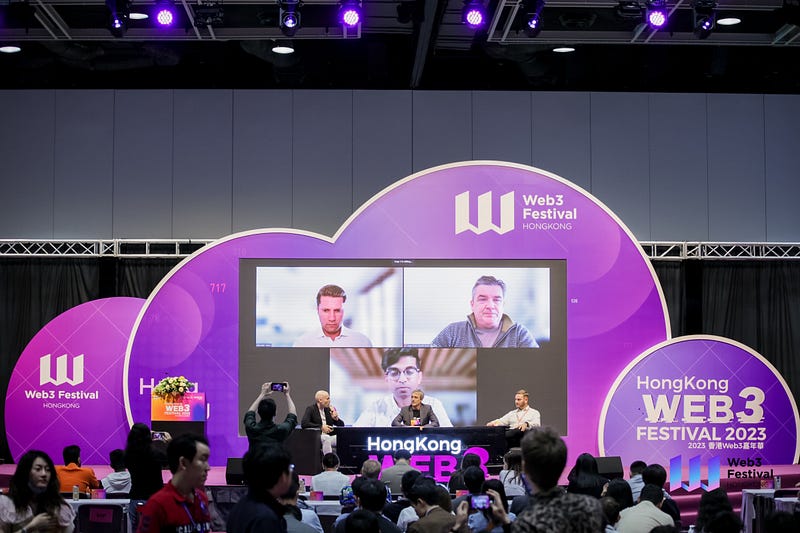
Panel 3 “The Emerging Role of Web3 in Regenerative Finance” was hosted by Ben El-baz, head of Ecosystem of HashKey , featuring notable guest speakers including Bill Kentrupl, AlIinfra Co-founder; Julien Martin, Founder or Digital Climate Group; Nikhil Ragghuveera, Head of Strategy & Innovation of Celo; Ingo Puhl, Co-founder of South Pole; Alasdair Were, Digital Climate Markets of International Emissions Trading Association
Ben El-baz, head of Ecosystem at HashKey, moderated Panel 3 titled “The Emerging Role of Web3 in Regenerative Finance.” The panel featured prominent guest speakers including Aliinfra Co-founder Bill Kentrupl, Founder of Digital Climate Group Julien Martin, Head of Strategy & Innovation of Celo Nikhil Ragghuveera, Co-founder of South Pole Ingo Puhl, and Digital Climate Markets of International Emissions Trading Association Alasdair Were. The final panel of the event and the closing session of the day attracted influential guests with experience in traditional finance and carbon markets, including representatives with long years of working experience with organizations such as Hong Kong Exchange, Verra(Verified Carbon Standard Association) and the World Bank. The discussion centered around the potential of Web3, blockchain, and smart contracts to revolutionize regenerative finance and climate finance, highlighting the impact of ReFi and the digitalization of the carbon market. The panelists discussed the benefits of placing renewable and natural capital assets on digital rails and tokenizing them for green finance. This approach can reduce costs, provide data-rich products, and connect stakeholders directly to asset benefits.
Decentralization was also emphasized as a critical factor in decision-making, creating new financial products, and structuring debt or loans using smart contracts. The panelists believe that pricing negative externalities and creating new types of digital assets tied to the real world will be essential to funding markets in the future. Overall, the panelists agreed that Web3, blockchain, and smart contracts have the potential to make financing sustainable projects or green finance more efficient and bring the finance market closer to exciting assets.
By Arkreen on April 30, 2023.