Redefining Brand Carbon Neutrality Strategy: Making Every User Interaction a Cornerstone of a Sustainable Future

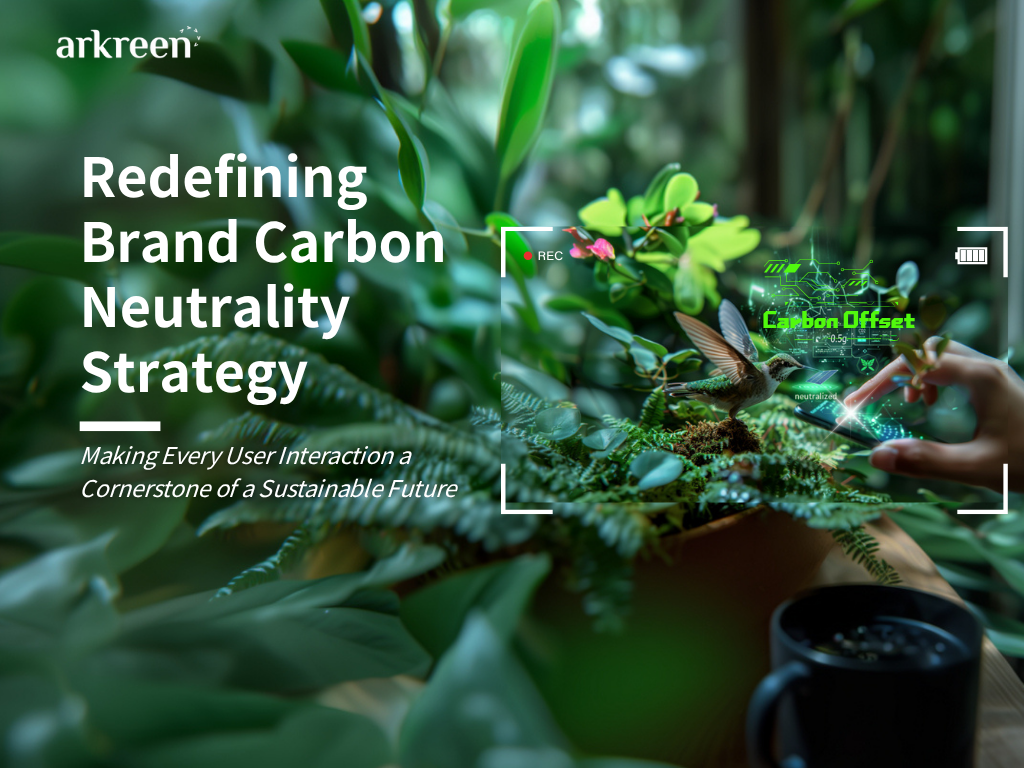
In today's era of sustainability, brand enterprises are increasingly aware of the importance of voluntary carbon neutrality. However, traditional carbon neutrality methods are often limited to the brand's own participation, such as offsetting operational carbon footprints through the purchase of carbon credits or renewable energy certificates, while millions of users who interact with the brand daily are excluded from sustainable actions. This one-way carbon neutrality narrative is being rewritten by technological innovation. With the acceleration of digital transformation and the widespread application of AI technology, brand enterprises now have the opportunity to share the responsibility of carbon neutrality with users through innovative solutions—based on AREC (on-chain renewable energy certificates) and on-chain offsetting technology—creating a more transparent and participatory sustainable development model.
Limitations of Traditional Models: One-Way Narrative and Lack of Granularity
Current brand carbon neutrality practices often remain at the "annual procurement" level: purchasing hundreds of tons of carbon credits or renewable energy certificates to offset overall operational emissions. This model has two major constraints:
User participation gap: Consumers, as direct users of brand services, cannot perceive or participate in offsetting the carbon footprint generated by their behaviors.
Coarse data granularity: Annual total statistics make it difficult to accurately track the actual environmental impact of each transaction, let alone achieve real-time carbon neutrality.
New Opportunities Under Digital Transformation: From Macro Totals to Micro Moments
More and more brand enterprises are moving towards digitalization, with user interactions gradually shifting to digital platforms. These platforms, empowered by AI, provide users with efficient and personalized services. However, each digital service is accompanied by energy consumption, especially when relying on brown energy, which generates a certain carbon footprint. For example, AI-generated services can accurately estimate the electricity consumed and the corresponding carbon emissions by calculating the number of tokens produced.
This fine-grained carbon footprint calculation opens a new door for brand enterprises: breaking down the overall carbon footprint into the "capillaries" of each service and giving users the opportunity to participate.
User-Driven Carbon Neutrality: Building a Flywheel of User Participation in Carbon Neutrality
Imagine that when users use your AI-driven digital services—such as an online consultation or video recommendation—they can choose to offset the carbon footprint generated by that service after it ends. By purchasing a small amount of AREC (for example, 0.001 units of renewable energy certificates like 1KWh), users can directly "offset" the 1KWh brown energy usage of that service, achieving real-time 100% renewable energy and carbon neutrality.
This model not only transforms carbon neutrality from a single action at the enterprise level into a collaboration between the brand and users but also enhances users' environmental awareness and brand loyalty. The carbon footprint of each service can be offset at the moment it is generated, making carbon neutrality more real-time and transparent.
Challenges of Scaling Management: Why Choose On-Chain Solutions?
However, this innovative approach also brings significant challenges. Take a brand with millions of users as an example; its platform may generate billions or even tens of billions of service calls annually. Although the amount of renewable energy certificates required for each call is small, the total could involve billions of microtransactions. Traditional centralized infrastructure would need to invest enormous costs to maintain a credible system for managing, verifying, and tracking such a massive number of tiny green certificates, which is clearly impractical.
The emergence of blockchain technology provides a perfect solution to this problem. By tokenizing AREC (tokenized REC), renewable energy certificates can be split into extremely small units and efficiently traded and recorded on the chain. Whenever a user chooses to offset the carbon footprint of a service, the corresponding tokenized REC is transferred to their account via the blockchain, completing real-time offsetting. This process is fully recorded on the distributed ledger, ensuring transparency and immutability.
More importantly, as a decentralized infrastructure, the maintenance cost of blockchain is shared by the entire community, and brand enterprises only need to pay a small service fee for each transaction. This low-cost, high-efficiency feature makes blockchain an ideal choice for managing the lifecycle of a massive number of small green certificates.
Core Advantages for Brand Enterprises: Generation Z Consumers Include "Sense of Sustainable Participation" in Consumption Decision Equations
By adopting a voluntary carbon neutrality solution based on AREC and on-chain offsetting, brand enterprises will reap multiple benefits:
High transparency: All transaction records are publicly stored on the blockchain, allowing users and stakeholders to verify their authenticity at any time, enhancing trust.
User participation: Allowing users to directly participate in the carbon neutrality of each service, enhancing their sense of identity with the brand and environmental responsibility.
Real-time offsetting: Carbon footprints can be offset at the time of service use, without relying on annual bulk purchases.
Scalability: Blockchain can easily handle hundreds of millions of microtransactions, meeting the needs of brands of different sizes.
Innovation leadership: Refining carbon neutrality to each transaction and combining it with cutting-edge technology, demonstrating the brand's leadership in sustainable development.
To Brand Decision-Makers:
When Generation Z consumers include "sense of sustainable participation" in their consumption decision equations, we need to rethink the essence of carbon neutrality—it is not only a fulfillment of corporate responsibility but also an excellent scenario for building deep user identification. By transforming each transaction into a carbon neutrality moment that users can perceive and participate in, your brand is:
Shaping differentiated climate leadership
Establishing an ESG narrative based on blockchain trust
Activating a sustainable action network in the user community
A Call to a Sustainable Future: Making Every User Interaction a Cornerstone of On-Chain Climate Action
Voluntary carbon neutrality is not only a commitment by brand enterprises to environmental responsibility but also an opportunity to create value together with users. Through solutions based on AREC and on-chain offsetting, brands can break down carbon footprints to the smallest granularity of each transaction, achieving real-time, transparent carbon neutrality while empowering users to participate.
In the global wave of sustainable development, leading brands should not stop at traditional methods. Embracing blockchain technology and joining hands with users to address climate challenges can not only significantly reduce environmental impact but also win broader social recognition for the brand.
Now is the time to make every digital interaction a force for a greener future. Join this innovative action and lead the brand and users together towards a more sustainable tomorrow!